For the tern gsd vs riese muller multicharger three kid school run question, the short answer is this: the Tern GSD is the better fit if your school run involves tight urban streets, apartment storage, and a mix of riders sharing the bike, while the Riese & Müller Multicharger wins if you have hills, longer distances, and want a more traditional bike feel under heavy load. Both can legitimately carry three children with the right accessory stack, but they solve the problem in very different ways, and choosing between them comes down to your driveway, your terrain, and your tallest kid.
The Three-Kid School Run Reality Check
Before diving into the tern gsd vs riese muller multicharger three kid school run comparison, it helps to be honest about what "three kids" actually means on a longtail cargo bike. A three-year-old in a Yepp-style seat counts very differently than a nine-year-old who rides standing on the rear deck. Most parents we hear from in 2026 are running some combination of one toddler in a front or rear child seat, one elementary-age kid on a padded deck cushion with a safety bar, and one older kid either on a passenger kit with footrests or occasionally pedaling their own bike alongside.
![Lamicall Bike Frame Bag Waterproof - [1s Release] [2 in 1] Bike Phone Mount Holder, Bicycle Top Tube Bag, Cycling Pouch with Rain Cover, Bikes Accessories Gifts for Phones Under 7"](https://ebikeroo.com/aimg/images/I/71VKkKd2xtL._AC_SX679_.jpg)
That changes the math for both bikes. The Tern GSD S10 and GSD R14 are rated for a generous 200 kg (440 lb) gross vehicle weight, which on paper accommodates a parent plus three small passengers plus a backpack. The Riese & Müller Multicharger2 GT and Mixte are rated for 200 kg as well, but the geometry, wheelbase, and child-seat mounting options differ enough that the lived experience of loading three kids is meaningfully different.
Tern GSD: The Apartment-Friendly Three-Kid Hauler
The Tern GSD is built around two 20-inch wheels and a compressed wheelbase that's roughly the length of a regular bike. That short footprint is the GSD's secret weapon for the three kid school run. You can stand it vertically on its rear bumper in a hallway, wheel it into a freight elevator, and park it in a normal bike rack. For city families without a garage, that alone often closes the decision.
For three kids, the typical Tern GSD setup in 2026 looks like this: a Thule Yepp Nexxt Mini on the front stem for the youngest, a Clubhouse Mini with two Captain's Chairs on the rear deck for two older kids, and Sidekick Wide Decks if the third child is tall enough to ride standing instead of seated. The dual-battery option doubles range to around 100 miles, which matters less for short school runs but a lot for after-school errands stacked on top.
Handling-wise, the small wheels make the GSD feel nimble at low speed, which is exactly when you're loading three squirming kids and trying not to drop the bike. The trade-off is that small wheels are more sensitive to potholes and broken pavement, and the front Yepp seat does steer with the handlebars, which takes practice when the front child is heavy.
Riese & Müller Multicharger: The Hill-Crushing Mile-Eater
The Riese & Müller Multicharger uses 27.5-inch wheels and feels more like a regular bike that happens to have a long tail. For parents coming off a traditional commuter, the Multicharger's geometry is immediately familiar, and the larger wheels roll over curbs, tram tracks, and broken asphalt with much less drama than the GSD.
The three-kid setup on the Multicharger2 GT Family typically uses the Safety Bar 2 with two passenger cushions for the two older kids, plus a Thule Yepp Nexxt Maxi on the rear rack for the youngest, mounted forward of the safety bar. Alternatively, families with a young toddler add a front-mounted child seat on the head tube. The Multicharger's Bosch Cargo Line motor delivers 85 Nm of torque, which is meaningful when you're pulling away from a stop sign with 70 kg of children behind you on a 6% gradient.
Where the Multicharger pulls ahead for the three kid school run is on hills and on longer routes. Riese & Müller's dual-battery option offers up to 1,250 Wh, and the bike's longer wheelbase and larger wheels make it noticeably more stable at 25 mph than the GSD. The trade-off is storage: the Multicharger does not fold or stand vertically, so you need a garage, shed, or covered outdoor space.
Head-to-Head Comparison Table
| Spec | Tern GSD S10 / R14 | Riese & Müller Multicharger2 GT |
|---|---|---|
| Max gross weight | 200 kg (440 lb) | 200 kg (440 lb) |
| Wheel size | 20 inch | 27.5 inch |
| Motor | Bosch Cargo Line 85 Nm | Bosch Cargo Line 85 Nm |
| Battery options | Single 545 Wh or dual 1,090 Wh | Single 750 Wh or dual 1,250 Wh |
| Wheelbase / length | ~180 cm | ~200 cm |
| Three-kid kit | Clubhouse Mini + Sidekick + front seat | Safety Bar 2 + Yepp Maxi + front seat |
| Vertical storage | Yes (stands on rear bumper) | No |
| Best for | Urban, flat, shared between riders of different heights | Hills, longer routes, taller primary rider |
| Approx 2026 price (USD) | $5,500 - $7,500 | $7,500 - $10,500 |
Which Wins the Three-Kid School Run?
If your tern gsd vs riese muller multicharger three kid school run decision is being made in a flat, dense city with an apartment and a school under three miles away, get the GSD. The compact storage, low standover, and shared adjustability for both parents handle the daily reality better, and you'll never regret the lower price tag. If you live somewhere hilly, your route is more than five miles each way, or your primary rider is over 6'2" and wants a real bike feel under load, the Multicharger is worth the premium. It rides better, climbs better, and feels more secure at speed with three kids on board.
Essential Accessories for Either Bike
Regardless of which cargo bike you pick, the three-kid school run shopping list is surprisingly similar. Here are the accessories that come up over and over again from parents actually doing it.
Airmoto Portable Tire Inflator
Both the GSD and Multicharger run wider tires than your old commuter, and proper pressure matters a lot more when you're hauling 60-80 kg of children. Under-inflated tires sap range and make handling vague; over-inflated tires beat the kids up over every seam. The Airmoto Portable Tire Inflator lives in the cargo bay or pannier and lets you top up to spec in the driveway before pickup. Battery-powered, fits Schrader and Presta with the included adapter, and it's small enough to actually live on the bike instead of in the garage.
Cordless Tire Inflator Portable Air Compressor
If you want something with a touch more grunt for the wider Multicharger tires, the Cordless Tire Inflator hits higher pressures faster and includes a brighter digital readout. Either model works; the choice comes down to whether you prefer the Airmoto's pocketable form or this one's slightly faster fill time when you're already running late.
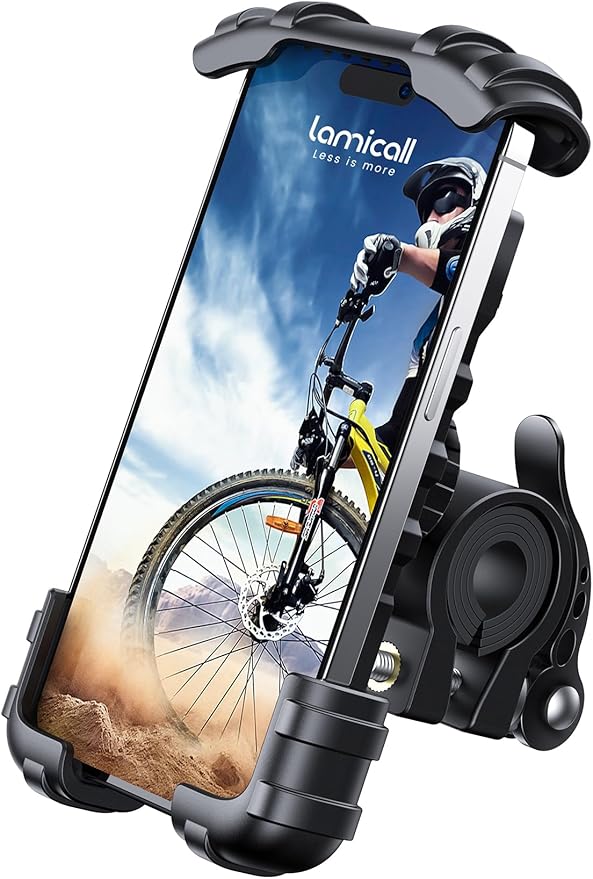
Lamicall Bike Phone Holder
School-run navigation, Strava tracking, music for the kids, and group-text coordination with other parents all happen on your phone, and on a cargo bike your phone needs to be visible without being a finger-poke away from disaster. The Lamicall Bike Phone Holder clamps onto either bike's handlebar in seconds, holds phones from compact to Pro Max sized, and rotates between portrait and landscape. It survives gravel sections and the occasional curb drop without losing grip, which matters when you're carrying precious cargo and can't stop to fish a phone out of the bushes.
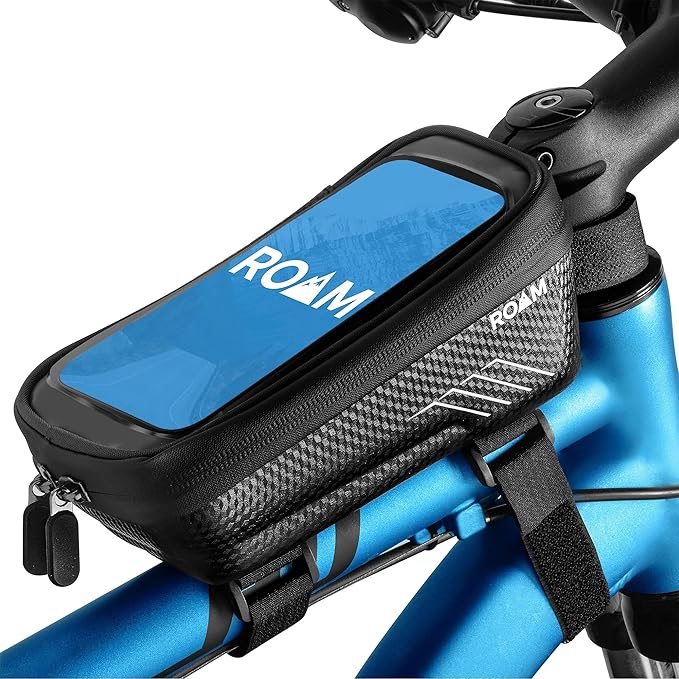
Lamicall Waterproof Bike Frame Bag with Phone Mount
For parents who want phone visibility plus on-bike storage for a wallet, keys, snacks, and a spare mask or hat, the Lamicall Waterproof Bike Frame Bag combines both in one mount. The clear touchscreen window means you can tap through Google Maps without taking the phone out, and the waterproof shell keeps the contents dry on a surprise rainy ride home from school. It mounts cleanly to the top tube of the Multicharger and to the stem area of the GSD.
Roam Universal Bike Phone Holder with Waterproof Case
If you want belt-and-suspenders weatherproofing for the phone itself, the Roam Universal Bike Phone Holder wraps the phone in a sealed case that still lets touch work. We've found it especially handy on the GSD, where the upright cockpit puts the phone right in the splash zone of a wet front tire. For families who use the bike year-round, this is the safer pick.
Setting Up a Real Three-Kid Configuration
Loading three kids isn't just about gross weight; it's about geometry and predictability. On the Tern GSD, the typical safe order is: smallest in front (Yepp Nexxt Mini), middle and oldest behind on the Clubhouse Mini with the safety bar latched and helmets on before you put the kickstand up. Practice mounting and dismounting with the bike loaded but stationary in a parking lot before you take it to traffic.
On the Multicharger, most three-kid families put the youngest in the rear Yepp Maxi forward of the safety bar, the two older kids in front of the safety bar on a long passenger cushion, and the parent leans the bike against a wall during loading because the high center of gravity is unforgiving if a child climbs on before you're ready. The double-leg kickstand helps, but a wall is better.
For more on the broader cargo bike landscape, see our deep dive on the best cargo ebikes for families in 2026, our longtail vs front-loader cargo bike comparison, and our review of child seats and safety bars for cargo bikes.
Total Cost of Ownership Over Three Years
For the tern gsd vs riese muller multicharger three kid school run buyer, the sticker price is only part of the math. A fully kitted GSD R14 with dual battery, Clubhouse Mini, two Captain's Chairs, front seat, and a quality lock comes in around $7,200-$7,800 in 2026. A comparably equipped Multicharger2 GT Family with safety bar, cushions, rear child seat, and dual battery lands closer to $9,500-$10,500. Add tires (you will replace the rear once a year under three-kid loads), a chain, brake pads twice a year, and one annual shop tune-up at around $200.
Both bikes hold their value remarkably well on the used market, with three-year-old examples typically selling for 55-65% of original price, which is dramatically better than a depreciating second car. For families replacing a vehicle trip, the math usually works out within 18 months.
Frequently Asked Questions
Can the Tern GSD really fit three child seats safely?
Yes, with the right kit. Tern explicitly supports a front Yepp Nexxt Mini plus the Clubhouse Mini system with two Captain's Chairs on the rear deck. The combined weight of three kids plus a parent must stay under the 200 kg gross vehicle weight rating, which in practice covers most families with kids 8 and under. Always check that the bike is on the certified Bosch software version and that your rear tire is rated for the load.
Is the Riese & Müller Multicharger too tall for shorter parents?
The standard Multicharger has a high top tube that can be awkward for riders under about 5'5". Riese & Müller offers the Multicharger Mixte with a step-through frame specifically to address this, and it accepts the same family kit. If two parents of very different heights will share the bike, the GSD's wider seatpost adjustment range and lower standover may be more comfortable for both.
What's the real-world range with three kids on board?
Expect roughly 30-50% less range than the marketing numbers suggest once you're loaded with three kids and using turbo mode on hills. A single-battery GSD realistically delivers 20-30 miles under three-kid load; dual battery doubles that. A single-battery Multicharger gets 25-35 miles loaded; dual battery comfortably handles 50-70 miles. For a daily school run under five miles round trip, single battery is plenty on either bike.
Do I need a license or insurance for these cargo ebikes?
In the United States in 2026, Class 1 and Class 3 ebikes do not require a license, registration, or insurance in most states, and both the GSD and Multicharger are sold in compliant configurations. However, many homeowner's policies will not cover theft or liability for a $7,000+ ebike, so most cargo families add a dedicated ebike insurance policy (typically $15-$25 per month) covering theft, crash damage, and third-party liability.
How long does it take to load three kids onto either bike?
Honestly, six to eight minutes once you have a routine, especially in winter with helmets, gloves, and jackets. Both bikes are similar here. The GSD has a slight edge for the very youngest kids because the rear deck is lower and easier for a four-year-old to climb onto unassisted. The Multicharger's higher deck means you'll often lift the youngest kid in, which is fine if you have the back for it.
Which bike is better for riding with kids in the rain?
The Multicharger's larger wheels and longer wheelbase make it noticeably more stable on wet pavement and painted lines, and its higher bottom bracket clears curb-edge puddles better. The GSD's small wheels are more skittish on slick surfaces, though it's still safe with proper tires. For both bikes, fenders, rain canopies for the rear seats, and a phone case like the Roam Universal Bike Phone Holder make all-weather school runs realistic.
What if my third kid outgrows the seat halfway through ownership?
This is where the GSD's modularity shines. The Sidekick Wide Decks let an older child stand on the rear platform with grab bars, which works well for kids roughly 7-12. The Multicharger has a similar option called the Passenger Kit footrest setup, but the geometry favors seated passengers more than standers. If you're planning a 5-7 year ownership horizon and your kids span a wide age range, the GSD adapts to changing kid sizes a little more gracefully.
The Bottom Line
The tern gsd vs riese muller multicharger three kid school run decision is mostly a decision about your home and your terrain. Both bikes can do the job, both are built to a standard that justifies their price, and both will replace a second car in most families that take the leap. Pick the GSD for compact storage, urban handling, and a lower buy-in. Pick the Multicharger for hills, distance, and a traditional ride feel under heavy load. Then spend the saved decision-making energy on the things that actually make the daily ride better: good tires kept at the right pressure, a phone mount you trust, and a routine your kids can follow on autopilot.
Key Takeaways
- Choosing the right tern gsd vs riese muller multicharger three kid school run means matching capacity and output ports to your actual devices
- Always check actual watt-hours (Wh), not just watts — runtime depends on Wh, not peak output
- Also covers: tern gsd s10 three child comparison
- Also covers: riese muller multicharger family hauling
- Also covers: cargo ebike comparison three children
- Compare price-per-Wh across models to find the best value for your budget