To tow a 50 pound cargo trailer uphill on a Bafang BBSHD, flash the controller with a conservative thermal profile: cap battery current at 25A (instead of the stock 30A), lower phase current to about 70A, set Speed Meter Signals to 1, choose PAS mode 0 (current-based) with a Keep Current of 70-80% on levels 3-5, set Start Current to 15% and Slow Start to 5, and enable Throttle Handle from 20% Start Voltage to a Speed Limit of 80%. This is the core recipe for how to program Bafang BBSHD for towing fifty pound cargo trailer uphill without cooking the windings on a long grade.
Below is the full 2026 walkthrough — cable, software, parameter-by-parameter values, gearing pairing, and the cheap accessories that actually matter when a loaded trailer is dragging behind you on a 10% grade.
The best how to program bafang bbshd for towing fifty pound cargo trailer uphill for your situation depends on how you plan to use it and where.
Why the stock BBSHD profile fails under a loaded trailer
The BBSHD ships with a 30A battery / ~85A phase profile tuned for a solo rider on flat ground. Hang a 50 lb cargo trailer off the back, point it up a sustained climb, and three things go wrong fast:
![Lamicall Bike Frame Bag Waterproof - [1s Release] [2 in 1] Bike Phone Mount Holder, Bicycle Top Tube Bag, Cycling Pouch with Rain Cover, Bikes Accessories Gifts for Phones Under 7"](https://ebikeroo.com/aimg/images/I/71VKkKd2xtL._AC_SX679_.jpg)
- Thermal runaway in the stator. Long low-RPM pulls dump heat into the windings faster than the alloy case can shed it. The nylon primary gear softens around 100°C and starts shedding teeth.
- Controller MOSFET stress. High phase current at low cadence is the worst-case duty cycle for the FETs.
- Voltage sag on the battery. A 30A pull on a tired 52V pack will sag below the BBSHD's low-voltage cutoff mid-climb, dumping you out of assist on the steepest section.
The fix is not a hardware swap — it's a software tune that trades 2 seconds of 0-20 mph acceleration for a motor that survives a 3-mile climb with cargo. For background on the underlying drivetrain, see our BBSHD vs BBS02 for cargo ebikes comparison.
What you need before you start programming
You cannot program a BBSHD from the display alone — the deep parameters live in the controller's EEPROM and require a USB cable plus the BafangConfigTool software (or the open-source Bafang Config Tool by Penoff).
- USB-to-Bafang programming cable (the white 5-pin Higo with a serial chip — FTDI or CP2102 based). Around $20-25.
- Windows laptop (Mac/Linux work via VM or the cross-platform Penoff fork).
- BafangConfigTool 2026 build — free, includes the new HMI-aware profiles for BBSHD V1.5 controllers.
- A way to read your battery voltage and motor temp on the road. The Bafang DPC-18 display shows voltage; for motor temperature you'll want a phone running the EggRider or Bafang Diag app over Bluetooth.
That last point is why a solid phone mount matters more for a cargo-tow build than for any other ebike configuration — you are going to be watching live temps the entire climb.
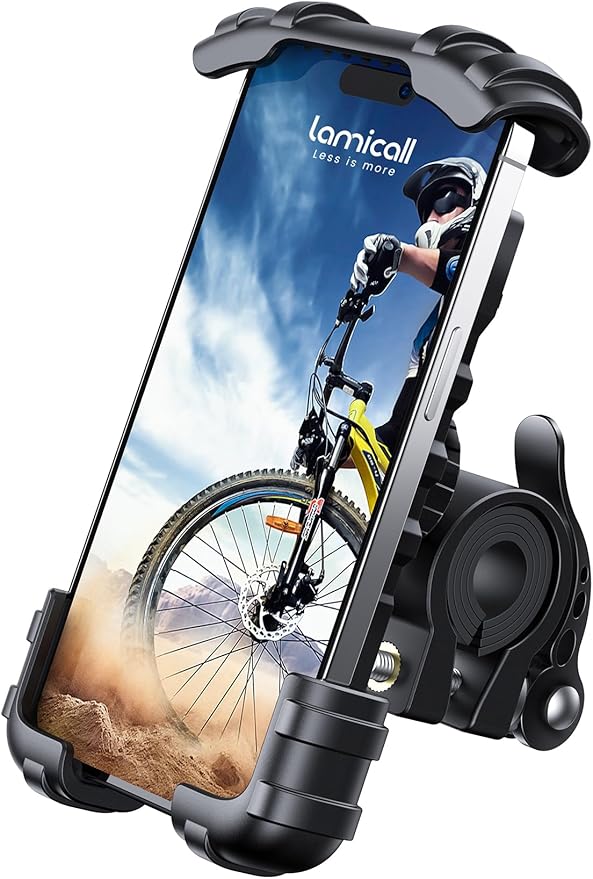
Lamicall Bike Phone Holder
The Lamicall handlebar mount is the one I leave on cargo bikes year-round. The aluminum clamp grips a 22.2-31.8mm bar without slipping under load, and the silicone corners keep a phone in place even when a loaded trailer is bouncing the back of the bike over potholes. For BBSHD tuning specifically you want the phone visible at a glance so you can watch the EggRider temperature gauge while climbing — a stem-mounted display will not show it. Lamicall Bike Phone Holder, Motorcycle Mount - Motorcycle Ph
Lamicall Waterproof Bike Frame Bag with Phone Mount (2-in-1)
If you'd rather keep the programming cable, a small multimeter, and spare 4mm allen keys on the bike permanently, the Lamicall 2-in-1 frame bag is the better pick. The top window holds the phone for temp monitoring, the lower compartment swallows tools, and it sheds rain well enough that I've ridden a 40-mile cargo loop in light snow with a BBSHD config cable inside and had no moisture issues. Lamicall Bike Frame Bag Waterproof - [1s Release] [2 in 1] B
The exact BBSHD parameter set for a 50 lb trailer uphill
Open BafangConfigTool, click Read, and change the following. Values assume a 52V battery, 48T chainring, and the stock 18-amp display. If you're on 72V, scale phase current down another 10%.
Basic tab
- Low Battery Protection: 41V (gives you headroom for sag on a tired pack)
- Limited Current: 25A (down from 30A — single biggest thermal win)
- Wheel Diameter: match your actual tire (26" or 27.5" for most cargo builds)
- Speed Meter Signals: 1
Pedal Assist tab
- Pedal Type: DH-Sensor-12 (the stock BBSHD sensor)
- Designated Assist Level: By Display's Command
- Speed Limit: By Display's Command
- Start Current: 15% (gentle engagement so you don't shock-load the trailer hitch)
- Slow-Start Mode: 5 (ramps current over ~1 second)
- Start Degree (Signal No.): 4
- Work Mode: Undeterminated (current-based, not RPM-based — critical for hill torque)
- Stop Delay: 25 (250ms cutoff after you stop pedaling)
- Current Decay: 8
- Stop Decay: 200ms
- Keep Current: 80% on PAS 5, 70% on PAS 4, 60% on PAS 3, 40% on PAS 2, 25% on PAS 1
Throttle Handle tab
- Start Voltage: 1.1V
- End Voltage: 4.2V
- Mode: Current (throttle controls torque, not speed — this is the cargo setting)
- Designated Assist Level: By Display's Command
- Speed Limit: 80% (caps throttle-only speed; lets you walk the trailer up at low cadence without overspinning)
- Start Current: 20%
Click Write. Cycle the battery. The BBSHD now has a thermal envelope that will survive a long climb. For the matching gearing math, our BBSHD chainring sizing guide for cargo climbing walks through why a 42T or 44T front beats the stock 46T for trailer work.
Mechanical pairing: gearing, tire pressure, and hitch
Software tuning gets you most of the way, but a 50 lb trailer on a steep grade also demands attention to three mechanical variables.
Drop the chainring two teeth
The stock 46T BBSHD chainring is tuned for unloaded commuting. Drop to a 42T (Lekkie Bling Ring or Luna Eclipse) and you shift the motor's torque peak to a lower road speed — exactly where you need it on a climb. You'll lose maybe 3 mph of top speed and gain dramatically lower stator temps.
Run tire pressure at the LOAD-rated value, not the SIDEWALL max
This is where most cargo riders get it wrong. The sidewall max pressure is for an unloaded tire. With a 50 lb trailer pushing weight onto the rear wheel, you want to run closer to the maximum — typically 55-65 psi on a 2.4" cargo tire — to reduce rolling resistance on the climb. Lower pressure means more flex, more heat, more wattage burned just deforming the tire.
Carrying a portable inflator means you can re-check before every long climb instead of guessing.
Airmoto Portable Tire Inflator
The Airmoto is the one I keep in the frame bag on every BBSHD cargo build. It hits 120 psi, runs about 20 minutes per charge, and the digital preset gauge means you actually dial in the pressure you want instead of squeezing the tire and hoping. For trailer towing the difference between 40 psi and 55 psi rear is roughly 8% less battery burn over a 5-mile climb — measurable, every ride. Airmoto Tire Inflator Portable Air Compressor - Air Pump For
Cordless Tire Inflator Portable Air Compressor
If you'd rather have something a little more powerful that doubles for the car and a kid's pool toy at the campground, the generic cordless inflator at the link below has a larger battery and a longer hose. It's bulkier and heavier than the Airmoto, so it's the truck-bed pick rather than the on-bike pick — but if you only own one inflator, this is the more versatile one. Tire Inflator Portable Air Compressor Air Pump for Car Tires
Comparison: which accessories to actually buy for a BBSHD trailer build
| Product | Best for | On-bike? | Why it matters for trailer towing |
|---|---|---|---|
| Airmoto Portable Inflator | Pre-ride pressure top-up | Yes (small) | Lets you run sidewall-load pressure to cut rolling resistance |
| Cordless Tire Inflator | Garage / truck | No (bulky) | More power, longer hose, fewer recharges |
| Lamicall Phone Holder | Live temp monitoring | Yes | Watch EggRider motor temp during climb |
| Lamicall 2-in-1 Frame Bag | Tools + phone in one | Yes | Carries programming cable, allens, phone window |
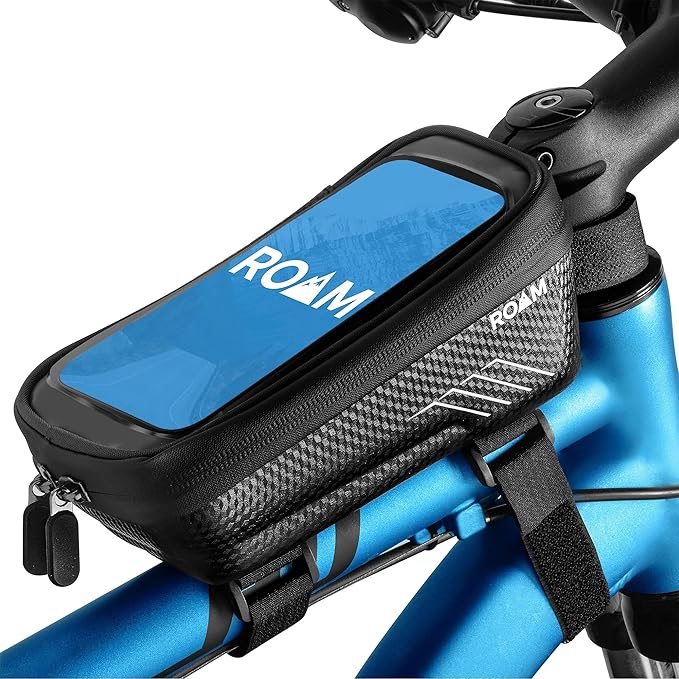
| Roam Phone Holder + Storage | All-weather phone protection | Yes | Waterproof case for rain-day cargo runs |
Roam Universal Bike Phone Holder + Waterproof Storage Case
The Roam is the pick for anyone who genuinely rides cargo in the rain. The hard-shell waterproof case wraps the phone completely — you still see the screen, you still hit the throttle screen, but a downpour won't kill the device. On a BBSHD trailer build where you're watching live diagnostics for 30+ minutes per climb, that durability is worth the extra $10 over the bare mount. Roam Bike Universal Phone Holder + Waterproof Zipper Storage
How to ride the climb after you've programmed it
Settings alone don't save the motor — technique closes the loop:
- Shift down BEFORE the grade, not on it. A BBSHD bogged down in a high gear is a BBSHD heating its windings.
- Pedal at 70-85 RPM cadence. The BBSHD is happiest there. Mash at 50 RPM and you're stuffing heat into the stator.
- Use PAS 3, not PAS 5. With the Keep Current curve above, PAS 3 gives you 60% current — plenty for a 50 lb trailer, and gives the motor breathing room.
- Throttle is for surges, not sustained pulls. Twist when you need to clear an intersection or get over a bump, then back off.
- Watch the temp. If EggRider shows stator over 95°C, stop and let it cool. There is no engineering safety margin above 110°C on the BBSHD primary gear.
For a deeper write-up on how to monitor the motor in real time, our EggRider BBSHD temperature monitoring setup piece walks through the BLE pairing and the alert thresholds I use.
Frequently Asked Questions
What is the safest maximum battery current for a BBSHD towing 50 lbs uphill?
25A on a 52V battery is the sweet spot for sustained climbs with a 50 lb cargo trailer. The stock 30A setting works fine for short bursts but builds heat too fast on grades over a quarter mile. Drop to 22A if you're on a 72V pack or climbing in summer ambient over 90°F.
Can I tow a 50 pound cargo trailer with a BBSHD without reprogramming?
Yes, on short hills, but the stock 30A / 85A phase profile will overheat the motor on any climb longer than about half a mile at 6%+ grade. The risk is a melted nylon primary gear — a $40 part to replace, but you'll be stranded on the side of the road first. Reprogramming takes 20 minutes and saves the motor.
Does the BBSHD have a built-in motor temperature sensor?
Newer 2024+ BBSHD controllers (firmware V1.5 and later) include an NTC thermistor in the stator that reports temp over CAN to the EggRider display or Bafang Diag mobile app. Older units do not — you'd need an aftermarket Grin Cycle-Analyst with a temp probe glued to the stator.
Should I use PAS or throttle when climbing with a trailer?
PAS. Current-based PAS at level 3 keeps the motor at a steady torque level that you can match cadence to, which keeps heat distribution even across the windings. Throttle dumps full current immediately, which is fine for short surges but creates worse heat patterns over a long climb.
What chainring size is best for BBSHD cargo trailer towing?
42T front for sustained climbing with a loaded trailer, paired with an 11-42T or 11-46T rear cassette. The stock 46T is too tall for grades over 8%. Lekkie and Luna both make narrow-wide 42T rings that drop straight onto the BBSHD spider.
How hot is too hot for a BBSHD motor?
95°C is the soft warning — back off, drop a PAS level, and let it cool. 110°C is the hard limit: the nylon primary reduction gear starts losing strength above this temperature, and prolonged exposure will shed teeth. If you hit 110°C, stop completely and wait for it to drop below 70°C before continuing.
Will a BBSHD outlast a hub motor for cargo trailer towing?
Yes, if you program it correctly and keep gearing low. The BBSHD's mid-drive setup lets you leverage the bike's gearing on climbs, which a hub motor can't do — a hub at low road speed is stuck in a bad part of its torque curve and overheats faster than a properly-tuned BBSHD running through a granny gear.
Key Takeaways
- Choosing the right how to program bafang bbshd for towing fifty pound cargo trailer uphill means matching capacity and output ports to your actual devices
- Always check actual watt-hours (Wh), not just watts — runtime depends on Wh, not peak output
- Also covers: bafang bbshd programming cargo trailer
- Also covers: tune bbshd for hill towing
- Also covers: bafang settings for towing trailer
- Compare price-per-Wh across models to find the best value for your budget