For Orthodox Jewish women riding an ebike, the best ebike helmet for hair coverage is one that sits comfortably over a tichel, snood, or sheitel without crushing volume, compromising tzniut, or sacrificing CPSC-certified protection. In 2026, that means looking for an oversized or extended-rear shell, an adjustable dial system that opens wide enough to clear a thick wrapped covering, smooth interior padding that won't snag wig fibers, and a low-profile visor that pairs well with sunglasses for modest sun coverage. This guide walks through what to look for, how to fit a helmet over different styles of head coverings, and which complementary ebike accessories make modest riding safer and easier.
What makes a helmet work for full hair coverage
Standard road and commuter helmets are designed to sit snugly against an exposed scalp. When you add a wrapped tichel, a mitpachat with a volumizer, a pre-tied snood, or a full sheitel underneath, you change three things: total head circumference, the shape of the crown, and the friction between the helmet liner and your covering. Choosing the best ebike helmet for hair coverage means accounting for all three.
![Lamicall Bike Frame Bag Waterproof - [1s Release] [2 in 1] Bike Phone Mount Holder, Bicycle Top Tube Bag, Cycling Pouch with Rain Cover, Bikes Accessories Gifts for Phones Under 7"](https://ebikeroo.com/aimg/images/I/71VKkKd2xtL._AC_SX679_.jpg)
First, measure your head with your usual covering on. Wrap a soft tape around the widest part of your head about one inch above your eyebrows, over the bulkiest section of the tichel or the front lace of the sheitel. Many Orthodox riders find they jump up an entire helmet size — from Medium to Large, or Large to XL — once the covering is factored in. A helmet that fits perfectly on bare hair will pinch, ride up, or sit unstably the moment a tichel is added.
Second, look for an extended occipital cradle. Urban and ebike-specific helmets often have a longer rear shell that drops further down the back of the head than a traditional road helmet. This matters for two reasons: the longer shell hides the back of a sheitel or the tail of a wrapped tichel, and it improves rear impact coverage at the higher speeds that ebikes routinely hit (20–28 mph for Class 2 and Class 3 ebikes).
Third, prioritize a smooth, low-pile interior liner. Helmets with aggressive antimicrobial padding can pull on lace-front wigs and pill the fabric of a wrapped tichel. A flat, moisture-wicking liner with rounded edges is much kinder to both natural hair styled underneath and to a synthetic sheitel cap.
Features to prioritize when shopping
Beyond the basics of certification and fit, these features separate a helmet that technically covers your hair from one that genuinely works for daily modest ebike commuting:
- CPSC 1203 certification at minimum. For Class 3 ebikes, look for NTA-8776 (the Dutch ebike-specific standard) for higher-speed impact protection.
- 360° dial adjustment, not just rear ratchet. A full-circumference dial accommodates the uneven contour created by a wrapped tichel knot at the back.
- Removable, washable liner. Sweat and oils from a sheitel cap accumulate quickly; you want to be able to launder the pads.
- Magnetic Fidlock buckle or flat nylon chin strap. Avoid bulky D-rings that catch on collar coverings or long sleeves.
- Integrated rear light. Modest clothing is often dark; a built-in tail light dramatically improves visibility for evening rides home.
- MIPS or equivalent rotational-impact system. The thin slip-plane liner adds protection without adding meaningful bulk over a covering.
Fitting a helmet over different coverings
Over a tichel or mitpachat
Wrap your tichel as you normally would, but pull the knot or the bulk of the wrap slightly lower on the nape rather than centered at the crown. This flattens the top profile so the helmet's MIPS liner sits flush. A volumizer pad worn under the tichel should be a thin foam disc rather than a tall scrunchie — tall volumizers force the helmet to perch instead of settling.
Over a sheitel
For a lace-front or hand-tied wig, brush hair smoothly back and secure it with a low ponytail or with hair-friendly clips behind the ears. Slide the helmet on from front to back, never dropping it down vertically, to avoid catching the front hairline. Look for helmets with a slight rear flare so the back of the sheitel isn't pushed forward into your line of sight.
Over a pre-tied snood or beret-style covering
These are the easiest to pair with a helmet because the profile is already low and uniform. You usually do not need to size up, but you do want to tuck any drawstring or elastic edge inside the helmet's ear-strap channels so they don't dig in.
Complementary ebike accessories for modest riding
A great helmet is the foundation, but several accessories round out a safe, dignified, and practical ebike setup for Orthodox women riding to work, to shul on Erev Shabbat preparations, or around the neighborhood. These are the picks I keep recommending in 2026.
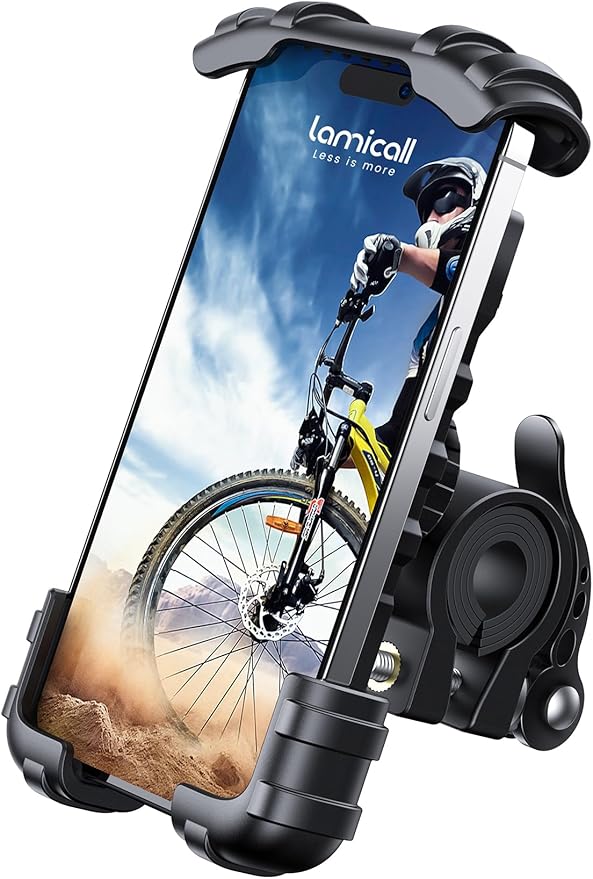
Lamicall Bike Phone Holder for navigation without breaking modesty
Pulling a phone out of a pocket while riding is unsafe and, for many modest riders, awkward because of the layering involved. A solid handlebar mount lets you glance at Waze or Google Maps without fishing through a coat. The Lamicall mount uses a 360° rotating cradle and a silicone-grip arm that holds phones securely even on cobblestones and Belgian-block streets common in Brooklyn and Lakewood neighborhoods.
Check the Lamicall Bike Phone Holder on Amazon
Lamicall Waterproof Bike Frame Bag with Phone Mount (2-in-1) for extra coverings
Modest riders frequently want to carry a spare tichel, a wider scarf for a destination with stricter standards, or a small rain layer. This 2-in-1 frame bag mounts on the top tube and gives you a waterproof phone window plus an interior pouch large enough for a folded scarf, keys, and a wallet. The waterproof zipper keeps everything dry during summer thunderstorms.
Check the Lamicall 2-in-1 Frame Bag on Amazon
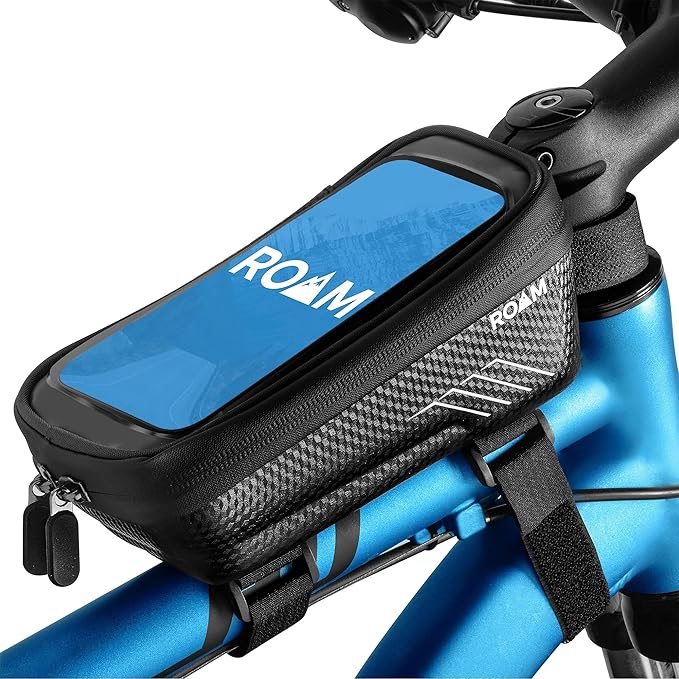
Roam Universal Bike Phone Holder + Waterproof Storage Case
If your ebike commute regularly includes weather you can't predict, the Roam mount with its integrated waterproof case is the more rugged choice. It fits phones up to 7 inches with a case on, and the storage compartment is large enough for a spare hair clip, lip balm, or a small folded snood swap. It's the accessory I recommend for riders going more than a few miles each way.
Check the Roam Bike Phone Holder + Storage on Amazon
Airmoto Portable Tire Inflator for safer solo rides
A flat or under-inflated tire is the most common reason an ebike commuter ends up stranded. Modest riders often prefer not to be stuck on a roadside flagging down strangers. The Airmoto is pocketable, rechargeable, and inflates a standard 27.5" or 700c ebike tire from soft to ride-ready in under three minutes. Keep it in the frame bag and you've eliminated the most common roadside problem entirely.
Check the Airmoto Portable Inflator on Amazon
Cordless Tire Inflator Portable Air Compressor Pump (heavier-duty alternative)
If you ride a fat-tire ebike — increasingly popular for cargo and family hauling — the standard Airmoto can be slow. This larger cordless inflator handles fat tires and even car tires, making it a better fit for households that share one inflator across an ebike, a stroller, and a minivan.
Check the Cordless Tire Inflator on Amazon
Quick comparison of complementary accessories
| Product | Best For | Key Strength | Watch Out For |
|---|---|---|---|
| Lamicall Phone Holder | Daily navigation | Secure silicone grip, 360° rotation | No weather protection |
| Lamicall 2-in-1 Frame Bag | Carrying spare coverings | Waterproof + integrated phone window | Limited capacity for larger items |
| Roam Holder + Storage Case | All-weather commuting | Fully sealed, fits cased phones | Bulkier on the handlebar |
| Airmoto Inflator | Standard ebike tires | Pocketable, rechargeable | Slower on fat tires |
| Cordless Compressor Pump | Fat-tire ebikes + family use | High volume output | Heavier to carry |
Putting the whole modest ebike kit together
The best ebike helmet for hair coverage is the centerpiece, but the supporting accessories transform an ebike from a transportation tool into something genuinely usable for a busy Orthodox woman juggling carpools, work, and erev-Shabbos errands. Mount the phone holder so you don't fumble at intersections, run a frame bag with a spare tichel and an inflator inside, and pick a helmet sized one up from your bare-head measurement with a smooth liner and an extended rear shell.
For more on building out an ebike for daily mitzvot and family logistics, see our guides to choosing an ebike for Orthodox women, modest ebike clothing that handles wind, and preparing your ebike before Shabbat.
Frequently Asked Questions
What size ebike helmet do I need over a thick tichel?
Most riders need to go up exactly one size once a wrapped tichel with a volumizer is factored in. Measure with the tichel on, an inch above the brows, around the bulkiest point. If you land between sizes, pick the larger one and tighten the dial — a too-small helmet that perches is unsafe regardless of certification.
Will an ebike helmet damage a sheitel?
It can, if the helmet has a heavily textured liner or sharp interior pad edges. Look for smooth, flat moisture-wicking pads, slide the helmet on from front-to-back rather than dropping it vertically, and remove it the same way. Avoid rough nylon webbing near the temples where lace-fronts are most fragile.
Are there kosher-certified or specifically Jewish-marketed ebike helmets?
There is no halachic certification body for helmets, but several urban-commuter brands market "oversize" or "long-hair" variants that work well for both Orthodox Jewish women and Sikh and Muslim riders who need extra coverage. The relevant certifications to look for are CPSC 1203, NTA-8776 for Class 3 ebikes, and ideally an integrated MIPS rotational-impact system.
Can I wear a helmet over a pre-tied bandana fall combination?
Yes, but the fall portion needs to be braided or low-bunned at the nape rather than hanging loose. A loose fall under a helmet creates leverage points that can shift the helmet in a fall. Braid the fall, secure it under your jacket collar, and choose a helmet with an extended rear shell so the braid is concealed.
What about helmets for riding on Chol HaMoed or family ebike outings?
The same fit principles apply, but consider a helmet with an integrated rear LED for early-evening returns and a removable visor for sun. If you're riding with children on a longtail cargo ebike, prioritize NTA-8776 certification because cargo speeds combined with passenger weight raise the relevant impact energies.
Is MIPS worth it on top of a tichel?
Yes. MIPS adds only 2–4mm of slip-plane material and does not meaningfully change the inner circumference. Because a head covering already adds a layer of friction-reducing material, some riders worry MIPS becomes redundant — it does not. The rotational forces MIPS addresses happen at the brain level, not at the scalp, and a tichel does nothing to mitigate them.
How do I keep a helmet from messing up my sheitel after I arrive?
Carry a small wide-tooth comb and a travel-size dry shampoo in your frame bag. Remove the helmet front-to-back, smooth the front lace with your fingers, and run the comb through the lengths. A quick spritz of dry shampoo at the crown restores volume that the helmet flattened. Many riders also keep a fresh pre-tied snood as a backup if the sheitel needs a more substantial reset between appointments.
Key Takeaways
- Choosing the right best ebike helmet for hair coverage means matching capacity and output ports to your actual devices
- Always check actual watt-hours (Wh), not just watts — runtime depends on Wh, not peak output
- Also covers: modest helmet for ebike riders
- Also covers: ebike helmet over tichel or sheitel
- Also covers: helmet with full hair coverage
- Compare price-per-Wh across models to find the best value for your budget